How to build a home library for kids
You do not need a huge room or a big budget. A small, well-chosen shelf of books within a child's reach can make reading part of everyday life.
On this page
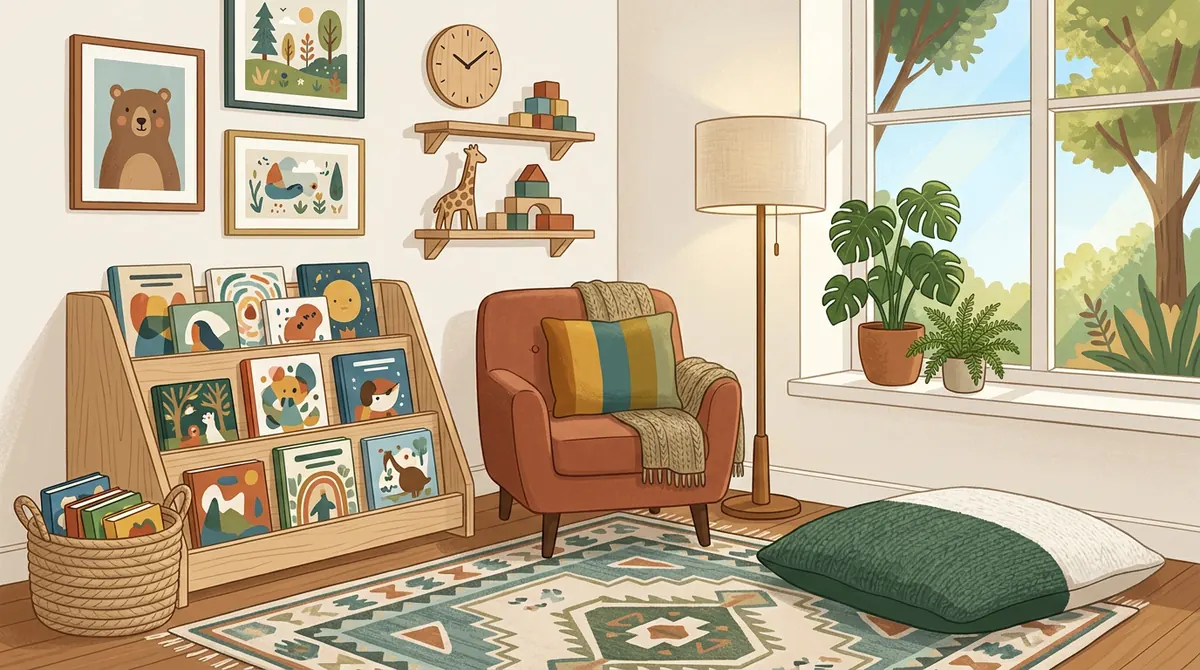
Children who grow up surrounded by books tend to pick them up more often. A home library does not need to be large or fancy. A low shelf, a basket of favorites and a cozy place to sit can make a big difference. This guide walks you through what to include, where to find books without spending much, and how to keep the collection fresh.
Why a home library matters
Having books at home gives children the chance to read whenever they are curious, not just at the library or at school. Research that looked at homes in many countries has found that children from homes with more books tend to do better with reading later on. A shelf of their own also tells a child that reading is something your family values.
How many books do you need?
There is no magic number. A good starting goal is 20 to 50 books that suit your child's age and interests. It is better to have a smaller shelf of books your child loves than a big collection that sits untouched. You can always grow it over time.
What to include by age
Babies and toddlers (0 to 2)
- Board books with thick pages that survive chewing and grabbing. See our guide to board books for babies and toddlers.
- Touch-and-feel books and lift-the-flap books.
- Simple picture books with bright pictures of faces, animals and everyday objects.
- Nursery rhymes and songs that you can sing together.
Preschoolers (3 to 5)
- Picture books with short, repeating text that children can join in on.
- Concept books about colors, counting, shapes and the alphabet.
- Stories about everyday life, like starting school, a new sibling or going to the doctor.
- Simple nonfiction about animals, trucks, space or whatever your child loves.
Early readers (5 to 7)
- Easy readers with simple words and lots of pictures.
- Picture books for reading aloud, which can be more complex than what children read alone.
- Joke and riddle books, which are great for building confidence.
Older kids (8 to 12)
- Chapter books and series, which keep kids reading because they want to know what happens next.
- Graphic novels and comics, which are real reading and a favorite for many kids.
- Nonfiction: science, history, biographies, how-to books and fact books.
- Poetry and short stories.
For specific titles, see the best books for kids by age.
Aim for a mix
A good home library has variety. Try to include:
- Fiction and nonfiction. Many children love facts more than stories.
- Mirrors and windows. Books where your child sees people like themselves, and books about lives different from their own.
- Your family's traditions. If you celebrate Jewish holidays, for example, see our guides to Jewish books for kids and Chanukah books.
- Some classics and some new books. Classics you loved as a child are fun to share, and new books keep things fresh.
Where to find books without spending much
You do not need to buy everything new. Our full guide to saving money on books has more ideas, but here are the best places to start:
- Library book sales. Many public libraries sell donated books for very little.
- Thrift stores and yard sales. Children's books often cost less than a dollar.
- Free book programs. Dolly Parton's Imagination Library mails free books to young children in participating areas, and PJ Library sends free Jewish children's books in many communities.
- Book swaps. Trade outgrown books with friends, neighbors, schools and community centers.
- Little Free Libraries. Take a book, leave a book.
- Gifts. Ask relatives for books on birthdays and holidays. Our book gift guide can help them choose.
Do not forget your public library. Borrowing lets you test which books your child loves before you buy a copy to keep.
How to set up a reading corner
- Keep books low. Put books where your child can reach them without help.
- Face covers forward. Young children choose books by their covers, not their spines. A front-facing shelf, a rain gutter shelf or a simple basket works well.
- Add a cozy seat. A cushion, bean bag or small chair makes the corner inviting.
- Good light. A lamp or a spot near a window makes reading easier.
- Books in more than one room. A basket in the car, by the bed and in the living room means a book is always close.
Rotate to keep it fresh
If you have more books than space, store some in a closet and swap a few every couple of weeks. Rotated books feel new again, and children often rediscover old favorites. Keep the very favorite books out all the time.
Let your child help
Children care more about a library they help build. Let them choose some books at the library or bookstore, help arrange the shelf, and decide which books go in the basket this week. Some families add a simple bookplate with the child's name inside each book.
Look after the books
- Teach gentle page turning early.
- Keep a roll of clear book tape for torn pages.
- Store books away from damp areas.
- Pass on books your child has outgrown to a younger cousin, friend or a donation box.
Questions
How many books should a child have at home?
There is no exact number. A good start is 20 to 50 books that match your child's age and interests, and you can add more over time.
Where can I find cheap children's books?
Library book sales, thrift stores, yard sales, book swaps, Little Free Libraries and free programs such as Dolly Parton's Imagination Library are all good places to look.
Should I buy books or borrow from the library?
Both. Borrowing lets your child try many books for free, and buying the favorites gives them books they can read again and again.
How should I organize books for young children?
Keep books low and facing forward so children can see the covers, and rotate some books every few weeks so the shelf feels fresh.
Sources
Checked November 20, 2026.